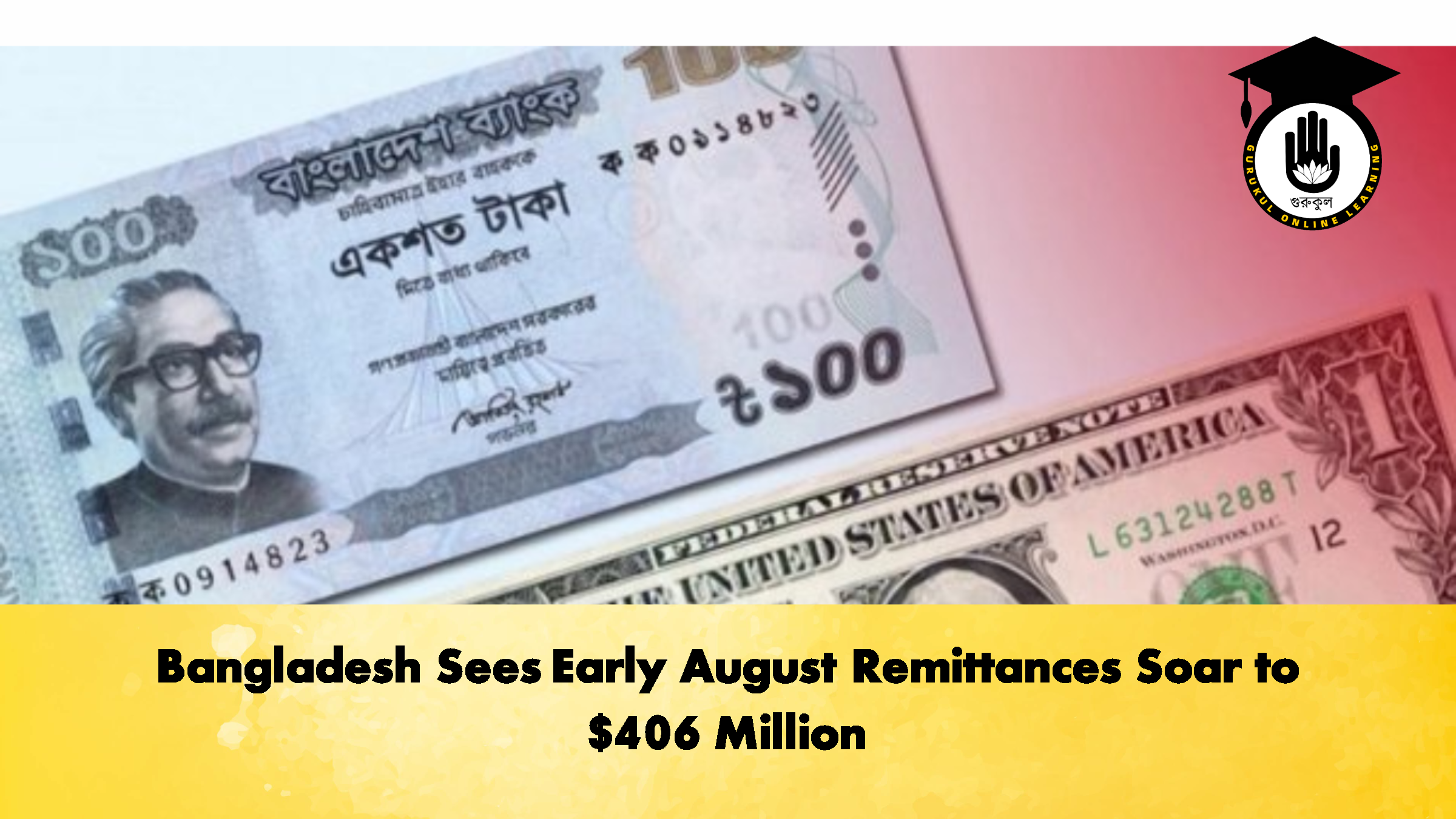
DHAKA, BANGLADESH — Expatriate Bangladeshis channelled $406 million in foreign remittances back home during the opening three days of August, marking a sharp year-on-year increase that reinforces the country’s external account balance.
The latest figures published by Bangladesh Bank show an 84.5% surge over the $220 million received during the exact same three-day window in the previous fiscal period.
Central bank records reveal that a significant share of these funds moved in a single 24-hour period. On 3 August alone, non-resident Bangladeshis remitted $133 million via licensed banking institutions and recognised transfer agencies.
Broader Fiscal Performance Gains Momentum
The early August figures build on a strong start to the 2026–27 fiscal year. Cumulative remittance earnings between 1 July and 3 August touched $3.265 billion, compared to $2.698 billion recorded across the equivalent timeline in the 2025–26 financial year.
This brings the total year-on-year growth rate for the fiscal period up to 3 August to 20.9%.
Remittance Performance Comparison (1 July – 3 August)
----------------------------------------------------
Fiscal Year 2025–26 : $2.698 Billion
Fiscal Year 2026–27 : $3.265 Billion  (+20.9%)
----------------------------------------------------
Monetary authorities attribute the persistent rise in formal transfers to narrowed exchange rate spreads between official channels and the curb market, complemented by state incentives for overseas workers. By maintaining competitive conversion rates, formal banking channels have effectively persuaded migrant workers across the Middle East, South-East Asia, Europe, and North America to bypass unregulated informal transfer systems like hundi.
Economic Implications for Household Consumption
Remittance flows represent a fundamental pillar of Bangladesh’s foreign exchange liquidity and balance of payments stability. Beyond macro-level benefits, such as supporting foreign currency reserves and facilitating essential import settlements, these cross-border transfers provide a direct lifeline to recipient households nationwide.
With living costs remaining a top priority for families, steady inflows from the global diaspora continue to underpin private consumption, healthcare expenditure, and educational investments in communities across the country.