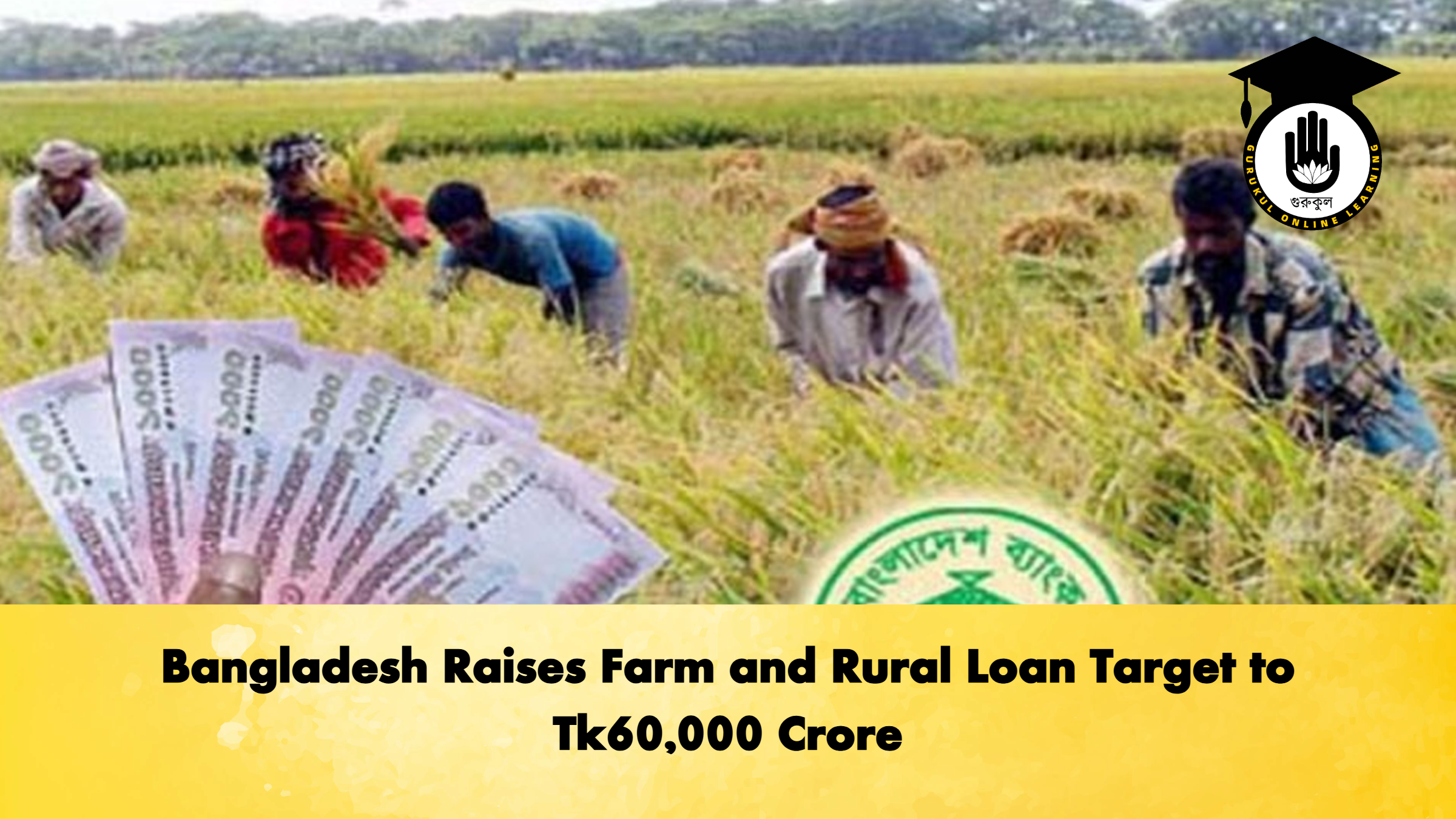
Bangladesh Bank has sharply increased the target for agricultural and rural loan disbursement for the 2026–27 financial year, setting an ambitious target of Tk60,000 crore. The new target is Tk21,000 crore higher than the Tk39,000 crore target set for the previous financial year, representing an increase of 53.85 per cent.
Governor Md Mostaqur Rahman announced the Agricultural and Rural Credit Policy and Programme for the current financial year at a press conference held at Bangladesh Bank headquarters on Monday, 17 August. The new policy places greater emphasis on expanding access to institutional finance, supporting agricultural production and strengthening the flow of credit into the rural economy.
The scale of the increase marks a significant departure from the relatively modest rise seen in the previous year. In 2024–25, the agricultural and rural credit target stood at Tk38,000 crore. It was raised by only Tk1,000 crore to Tk39,000 crore in 2025–26. For 2026–27, however, the central bank has raised the target by Tk21,000 crore in a single step.
The move reflects the continuing importance of institutional financing for farmers and rural economic activities. Agricultural credit is not confined to crop cultivation alone. Farmers require financing for seeds, fertilisers, irrigation, labour and other production expenses, while rural borrowers may also need funds for livestock, fisheries, agricultural machinery and small-scale businesses linked to the rural economy.
Timely access to credit is particularly important because agricultural expenditure is often seasonal. Farmers need to spend money before they can generate income from their crops. When formal credit is unavailable or difficult to obtain at the appropriate time, some borrowers may turn to informal sources, where financing can be more costly or less flexible.
The increased target therefore creates an opportunity to widen the reach of formal financial services among farming households and rural entrepreneurs. Greater access to institutional credit can reduce dependence on personal savings and informal borrowing, while providing working capital for productive activities.
The central bank’s policy also has implications beyond individual borrowers. Agriculture remains closely connected with food production, rural employment and household incomes. Increased financing can help farmers maintain production capacity and meet essential input costs. A stronger flow of funds into agriculture may also support the broader supply chain, involving traders, transport operators, input suppliers and other businesses connected with farming.
Rural economic activity is similarly broader than crop production. Livestock rearing, fisheries, small businesses and other income-generating activities provide livelihoods for large numbers of people outside major urban centres. Expanding access to credit in these areas can help sustain local commerce and create opportunities for income generation.
Yet the size of the target alone will not determine the success of the new policy. Effective implementation will depend on whether the increased volume of credit reaches genuine farmers and small rural entrepreneurs in a timely manner. Lending procedures, accessibility, appropriate repayment arrangements and effective monitoring will all influence the impact of the programme.
There is also a need to ensure that credit intended for productive activities is used for its stated purposes and that financial institutions maintain discipline in both disbursement and recovery. A rapid expansion of lending without adequate assessment and monitoring could create repayment risks for borrowers and lenders alike.
The Tk60,000 crore target consequently represents both an opportunity and a substantial implementation challenge. If effectively distributed, the expanded flow of institutional finance could strengthen agricultural production, support rural businesses, improve income-generating capacity and contribute to a more resilient rural economy.
For Bangladesh Bank, the central objective is to make formal financing more accessible while supporting the productive sectors that underpin rural livelihoods. The success of the 2026–27 programme will ultimately be measured not simply by the amount of credit disbursed, but by how effectively that financing reaches farmers and rural entrepreneurs and contributes to sustainable economic activity.