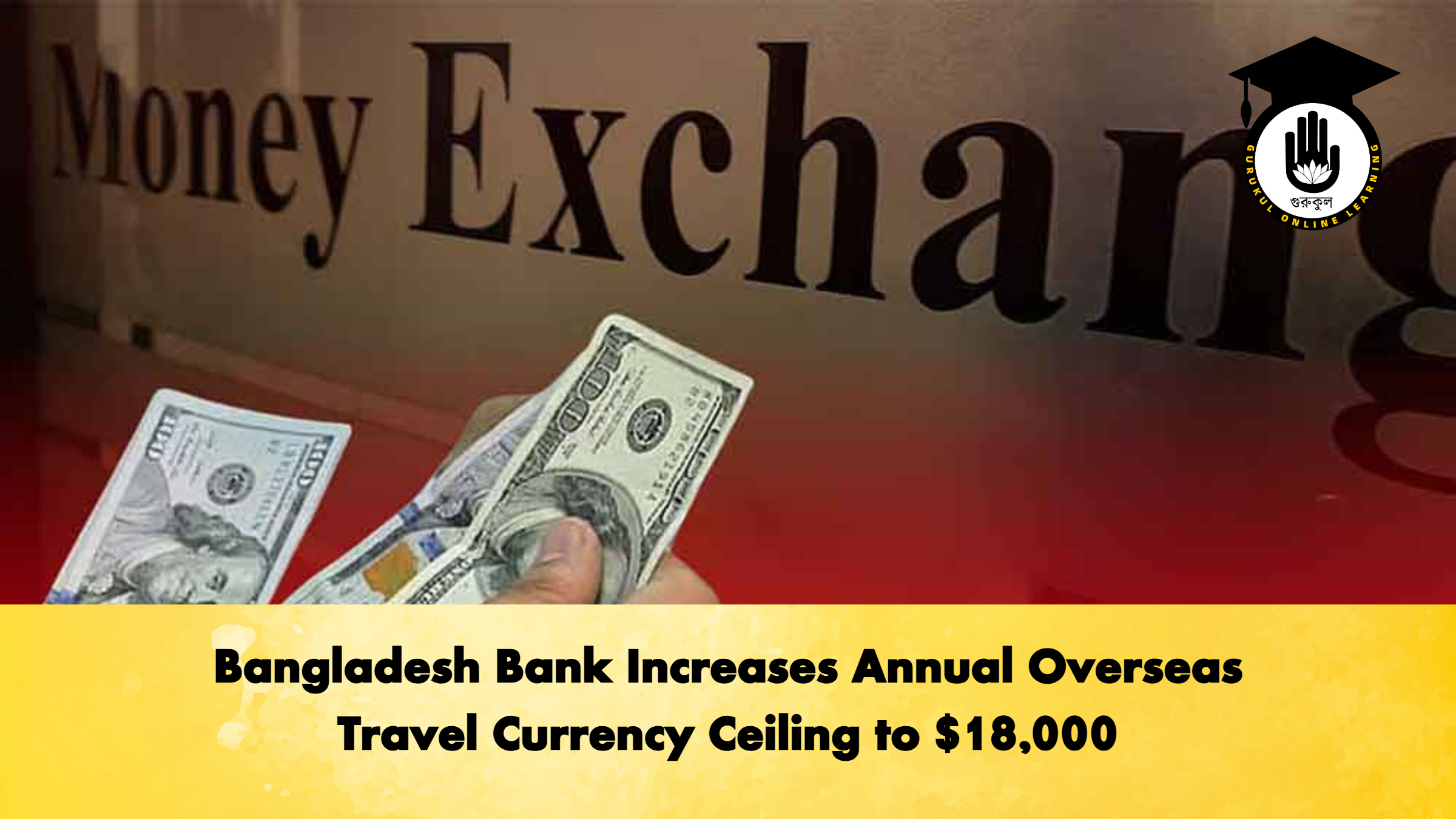
In a significant regulatory relaxation designed to accommodate rising international expenditure, Bangladesh Bank has expanded the annual foreign exchange allowance for outbound travelers by 50 per cent. Under the revised guidelines, adult Bangladeshi nationals are entitled to endorse and spend up to $18,000 (US dollars) or its equivalent in foreign currency per calendar year, raising the previous threshold from $12,000.
The Foreign Exchange Policy Department of the central bank issued a formal circular on Sunday, 6 September 2026, distributing the instructions to chief executives across all Authorised Dealer (AD) commercial bank branches. Monetary officials highlighted that the decision responds directly to evolving global travel dynamics, inflation abroad, and the genuine foreign exchange requirements of Bangladeshi citizens traveling overseas. The higher quota affords crucial financial flexibility for individuals journeying abroad for medical treatments, higher education, family visits, or commercial engagements.
Despite the $6,000 increase in overall yearly allocations, central bank regulators have maintained strict controls over physical cash banknotes. Existing limits governing cash endorsements remain entirely unchanged. Travelers can carry a maximum of $5,000 in paper currency per calendar year out of their total allowance.
The remaining $13,000 of the expanded allowance must be channelled digitally using international credit cards, debit cards, or pre-paid travel cards issued by licensed financial entities. By capping cash holdings while liberalising digital limits, authorities aim to discourage currency hoarding and mitigate illegal kerb-market speculation, ensuring foreign exchange flows primarily through traceable banking infrastructure.
The operational parameters for minor dependents under 12 years of age remain tied to the primary adult framework. Children remain entitled to 50 per cent of the total adult allocation. With the primary threshold moving to $18,000, the entitlement for young travelers rises proportionally to a maximum of $9,000 per calendar year.
| Foreign Exchange Regulation Parameter | Updated Policy Baseline |
| Adult Annual Foreign Currency Quota | $18,000 (US Dollars) |
| Previous Annual Foreign Currency Quota | $12,000 (US Dollars) |
| Absolute Increase in Annual Ceiling | $6,000 (US Dollars) |
| Percentage Expansion in Travel Quota | 50% |
| Adult Annual Physical Cash Entitlement Limit | $5,000 (US Dollars) |
| Non-Cash Digital Quota Allocation | Up to $13,000 (US Dollars) |
| Permitted Digital Payment Channels | International Travel, Credit, and Debit Cards |
| Minor Entitlement Allocation Ratio (Under 12 Years) | 50% of Adult Allocation |
| Minor Annual Foreign Currency Quota | $9,000 (US Dollars) |
| Date of Policy Implementation Directive | 6 September 2026 |
This policy shift comes amidst broader stabilization across Bangladesh’s domestic foreign exchange landscape. Interbank dollar rates have recently settled near 122.78 taka following a brief period of planned realignment to meet International Monetary Fund (IMF) loan benchmarks. Robust remittance inflows via formal banking channels have strengthened foreign reserves, granting central bank policymakers the liquidity buffer needed to ease personal travel expenditure limits without risking systemic currency pressure.
For outbound citizens, the practical impact lies in greater flexibility for card-based international transactions. Whether settling hotel reservations, medical bills, or transport logistics overseas, travelers can draw upon a substantially larger financial cushion while remaining compliant with central bank foreign exchange rules.