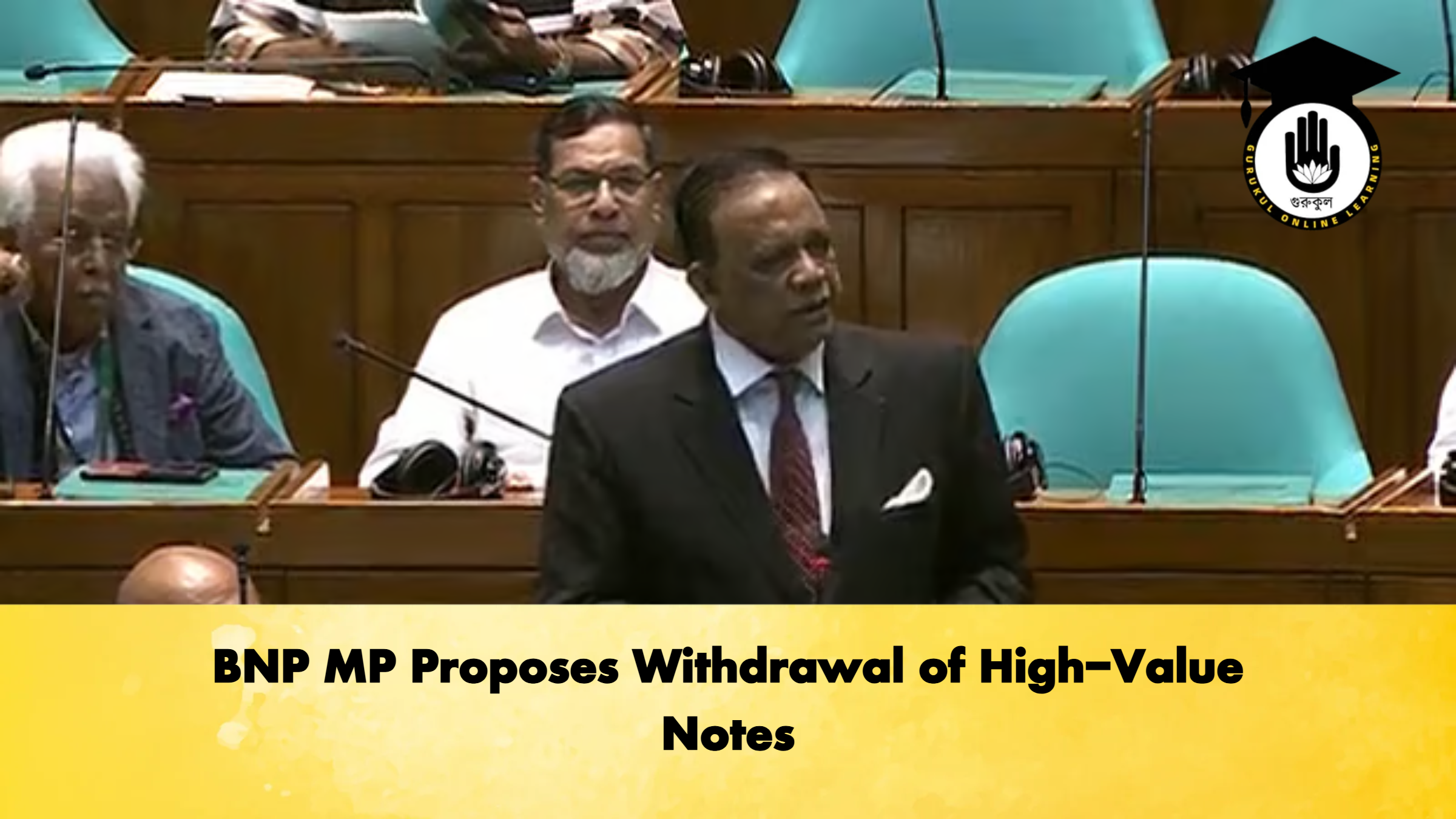
A Bangladeshi opposition lawmaker has floated the idea of temporarily withdrawing higher denomination banknotes as part of a broader effort to bring unaccounted cash back into the formal banking system and ease liquidity pressures in the financial sector.
Speaking during the general discussion on the proposed national budget for the 2026–27 financial year in Parliament on Sunday, BNP Member of Parliament Mahbub Uddin Khokon suggested that 500 and 1,000 taka notes could be withdrawn for a limited period. According to him, such a move could encourage holders of large amounts of cash kept outside the banking system to deposit their funds in formal channels.
He argued that a significant volume of money is currently being stored privately in households, driven by declining public confidence in banks. This, he said, is restricting the flow of money within the economy and contributing to liquidity constraints in the banking sector. As cash circulation slows, banks face difficulties in maintaining adequate lending capacity, which in turn affects investment and broader economic activity.
The lawmaker further claimed that individuals involved in capital flight or those whose income is not fully reflected in tax records are likely to be holding substantial amounts of cash outside regulated financial institutions. He suggested that a structured window allowing deposit of such money, followed by taxation at a defined rate, could help formalise a portion of these funds while also increasing state revenue.
Under his proposal, the withdrawal of high-denomination notes would be accompanied by a short transition period, reportedly around two months, during which citizens could deposit their holdings into banks. He argued that this would help widen the tax base and improve liquidity within the financial system, potentially reducing budgetary pressure.
Beyond the currency proposal, Khokon also raised broader concerns about the structure of the banking sector. He suggested that the number of banks operating in the country may be excessive, contributing to weakened management standards and heightened risks to deposit security. A consolidation of the sector, he argued, could help build a more stable and resilient financial framework.
He also pointed to what he described as undue influence from politically connected and powerful groups within the financial system, saying such pressures have placed additional strain on banking operations and raised public concern over the safety of deposits. Without addressing these underlying issues, he warned, achieving long-term stability in the sector would remain difficult.
Capital flight was highlighted as a persistent challenge for the economy. The MP noted that despite repeated discussions over the years about recovering money allegedly transferred abroad, little progress has been made. He attributed this partly to the complexity of international financial systems, which makes retrieval of such funds particularly difficult.
Khokon emphasised that individuals tend to keep or invest their money where they feel secure. In his view, improving domestic confidence in financial institutions is essential to discouraging the transfer of capital abroad and encouraging investment within the country.
He also stressed that legislative measures alone are insufficient to change economic behaviour. Restoring trust in the financial system, he said, is central to ensuring that money circulates productively within the economy.
Turning to the broader fiscal framework, he noted that budget deficits are not unusual and are in fact common across many countries. Bangladesh’s own budgetary history, he observed, has frequently involved deficit financing.
He concluded by acknowledging that the current budget has been formulated under challenging economic conditions. Efforts to stabilise the economy, strengthen financial institutions and address structural weaknesses, he suggested, will play a decisive role in determining its success.